Skin In the Game: (An Art Project in 4 Acts)
This project uses tattoos and the tattoo process to investigate how people collect, grasp, and express artistic value, or what is valuable to them about art. The term “skin in the game” refers to an action of investment (not just financial) where the party/investor puts forth actual capital into an endeavor with the hopes for a return on investment. The more the investor puts forth, the more ownership that investor has of the endeavor, but also, the more that investor has to lose. He/she is said to have “skin in the game”. This project plays on this phrase, tackling questions about the extent to which people actually value, support, and invest in art by way of consumption, using tattoos as a comparative measurement. Additionally, there is also a literal interpretation, as the project uses tattooing and the skin as a point of origin for this discussion about the “game”of art.
It is important to note that this project is not about making an argument for tattoos as fine art, but to use the consumption of tattoos as a "temperature gauge" for how people value art (regardless of form). If people value tattoos over fine art, say, what does that tell us about the fine art industry?
Act 1. (The Research)
The number of individuals with tattoos; the increasing cultural acceptance of those with tattoos, especially within a “professional” context, resulting in an increase of the size and volume of tattoos that an individual acquires; the increasing sophistication of the imagery and design of tattoos; and the amounts spent acquiring tattoos leads to questioning why patrons are seemingly more willing to commission and collect tattoos versus fine art works. The question emerges when one notices and analyzes how many tattooed persons attend art events and how much was likely spent acquiring those tattoos. It becomes further intriguing when you discover how important they say art is to their lives and to the larger culture, and that their expenditures on tattoos is comparable to the cost of artwork. But unlike an artwork, a tattoo has no return on investment, and cannot be inherited. So why is it that laypersons seem to more easily commission and purchase tattoos compared to fine art? Conversely, what is it about fine art that distances lay-persons from consumption patronage? Put another way, I am researching the negotiation by the culture (generally speaking) of artistic value.
The specific line of inquiry is as follows:
-
•What is the true valuation that the general populace places on fine art, especially when we compare it to their valuation of another, more colloquial, art form that they also very much participate in, such as tattoo?
-
•What do the details of patronage between the fine art industry and the tattoo industry reveal about our desires, expectations, and understandings about art?
-
•To what extent does expression play a role in artistic value and whose expression is of greater value in the negotiation of art, the artist or the patron?
This project begins with data collection via surveys. These surveys are drafted to obtain base-line information about attitudes and behavior regarding the two industries from both tattoo and non-tattoo enthusiasts. (To view and fill out research survey click here)
Interviews are conducted with those considering obtaining a tattoo about their reasoning and their considerations between the two practices. In situations where a fine art piece was not considered, a proposal of fine art is submitted to the “customer”. If it is still determined that a tattoo will be the final product, then normal tattoo design and processes will commence. All drawings will be saved and the finished tattoo will then be documented. The bearer of the tattoo will be a subject in a full size fine art photo that documents their collection or sense of ownership regarding the tattoo. The photographic process may also capture something of the narrative that is the basis for acquiring the tattoo in the first place, and the externalization of identity and notions of self that are traditionally kept internal.
Interviews are also conducted between fine artists and tattoo artists about their notions regarding their own industry and their understandings of the other’s industry. These interviews categorize or clarify the patronage behavior of their respective customers/patrons using the perspective of the practitioner as a lens by which to examine the patrons. Special attention is paid to instances where the two industries happen to cross over, such as when tattoo artists also have experience within fine art contexts or when fine artists have a significant size or number of tattoos (both cases are becoming increasingly more common).
Projected Artworks: The works of this project vary to address the different issues that result from the inquiry. Thus far they are:
-
•Testimonial Works
-
•Flash Pieces
-
•Photo Documentary Works
-
•Contrast Pieces
-
•Performance Work.
Take Aways: I believe the biggest lesson is about the expectations of art by the contemporary culture. This investigation will have a secondary benefit of opening up discussions about the threshold between tattoos and fine art. Now seems to be a good time for such discussions, considering the contemporary artistic climate, willing to accept a wide variety of processes as means for producing and exhibiting art. We should keep in mind that It wasn’t that long ago that graffiti art was a fringe and illegal practice, whose cultural value became sanctioned by the art institution and is now viewed with greater appreciation for its capacity of expression. There is the possibility, therefore, of the fine art establishment giving greater consideration to tattoos, as well as the possibility of raising the standards of the tattoo process, thereby pushing both practices closer to being the same thing.
Act 2. (The Works)

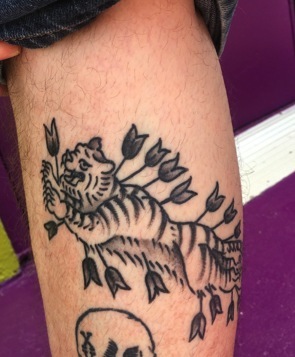
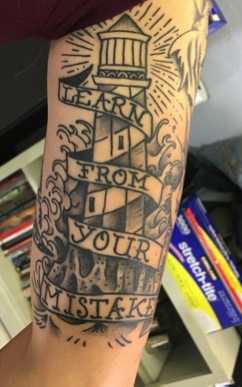
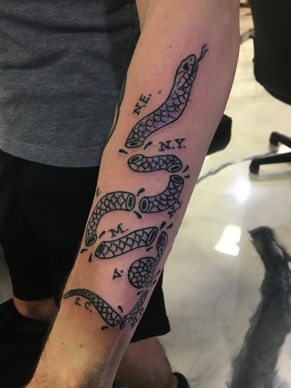
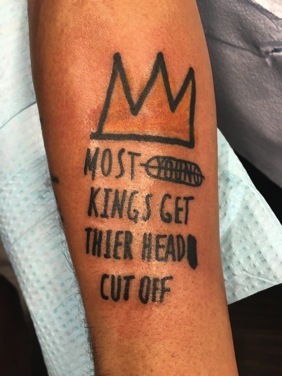
Tattoo portfolio on Instagram @skingameprojects
-
• Performance
-
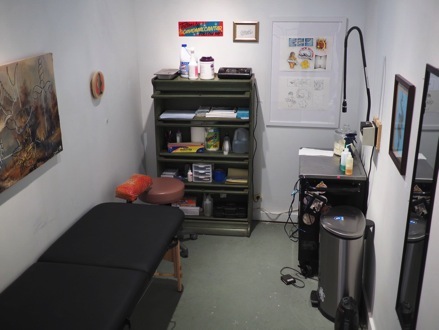
- An extended performance piece, where, throughout the length of the exhibition, the gallery hosting this project is transformed into a functioning tattoo shop, flips the scenario with respect to art patronage.
-
- With consideration given to how the two contexts inform and influence each other, the performance is not of an individual tattooing live in a gallery, but of the gallery performing as a tattoo shop. This change of behavior also changes how people navigate and interact within the space and with the objects on its walls, opening up conversation about how and why people collect art in the way that they do.
-
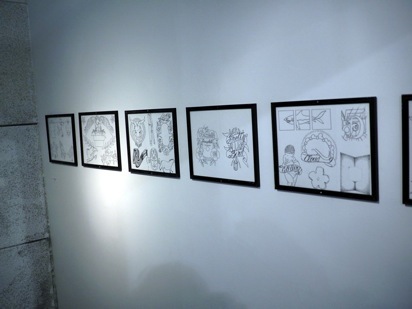
- The selection of available tattoo designs come from the historical and local iconographic “flash” discussed above, and is priced at a level far below the value of the actual/original artwork referenced, but whose valuation is comparable to what the average tattoo costs. This juxtaposition of unattainable, established historical iconography with a fringe practice, at the entry-level price points, forces consideration about how people support and collect art and the art-like.
-
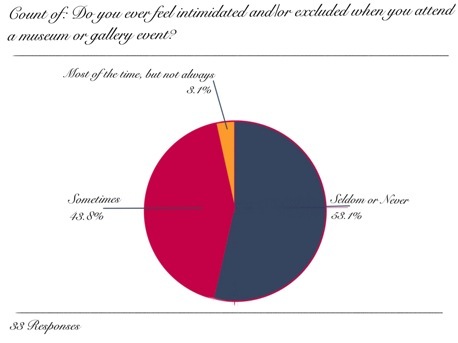
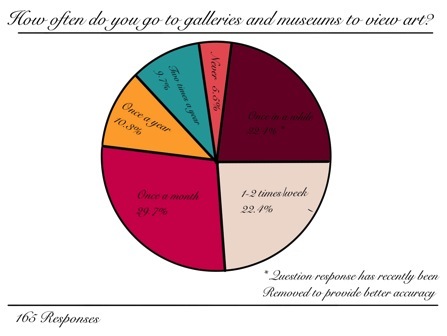
•Testimonials (Data Visualizations)
-
- The data collected through the research process is useful for establishing context, not just of the project, but for the specific art pieces that this project generates. The importance of that context to stimulate conversations about the similarities and differences between the industry and the patronage of tattooing and of fine art makes the visualization of the data as pertinent as any drawing, painting, photograph, or performance that is a product of this project.
-
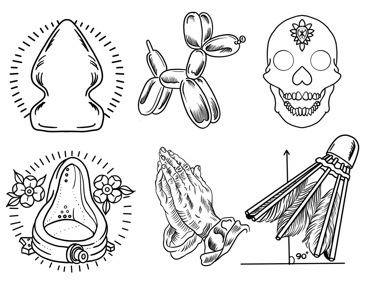
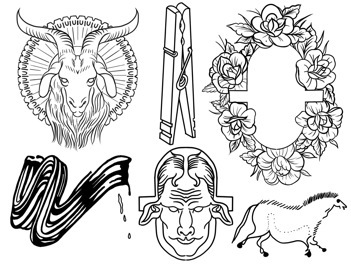
•Historical and Local Art Flash: “Contextual Parodies”
-
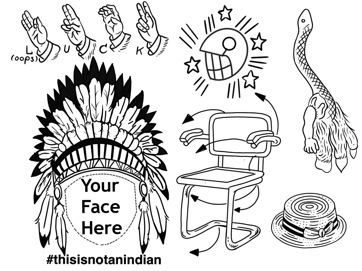
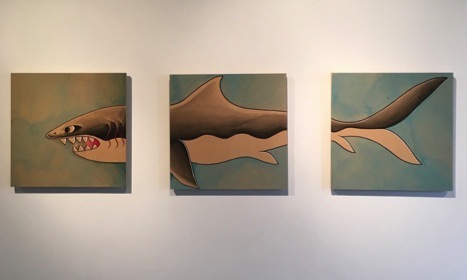
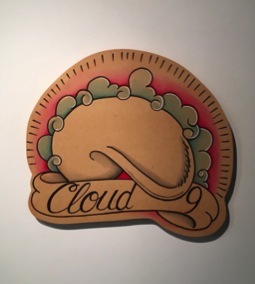
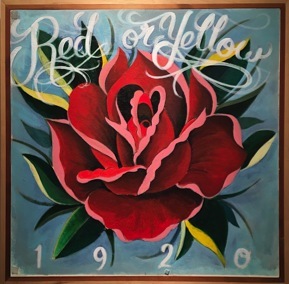
- Specifically referencing historically and locally iconographic artworks, these drawings, in the style of tattoo design, known as “flash”, are a commentary on contemporary and traditional collection behavior, both within the fine art context and in popular culture. They make a “tongue-in-cheek” jab at art speculation by referencing the iconographic and historical imagery in a format that is generally viewed as “not serious” by the institution of art but bring up questions about accessibility to art.
-
- While art historical pieces have been subjects of tattoos for decades, a problem tends to occur because of a loss of translation from one format into another. To compensate, these pieces accept that loss of translation and use it as part of the aesthetic for the designed “flash”
-
• Portrait, Documentary, and “Permanent Collection” Photos
-
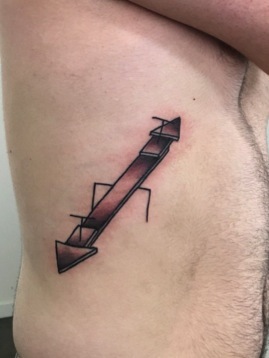
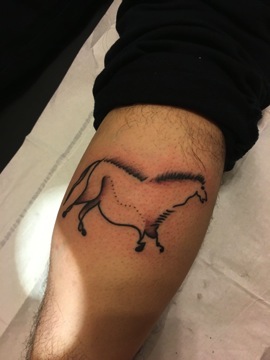
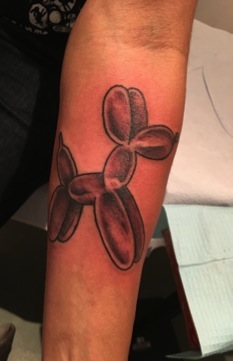
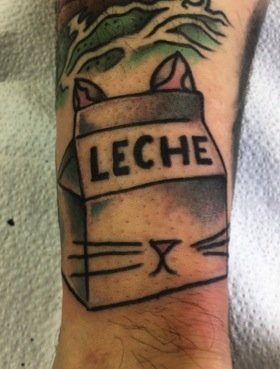
- The Portrait and/or Documentary photos are created as a way to show narrative considerations involved in tattoo acquisition/collection.
-
• Contrast Pieces
-
- Artworks in the form of prints, drawings, or paintings of tattooed subject matter would act as contrasts for audiences to compare between the tattoo and the traditional object as vehicles for meaning. Much of Pop-art re-contextualized popular imagery, creating significance from commenting on the consumption by the culture of the visually popular, which was often trivial. This project directs such commentary in both directions: from the tattoo portion of pop culture to fine art and from the industry of fine art to pop culture.

Act 3. Conversational, Colloquial Art Proliferation.
Description coming soon.